Nov. 25, 2026
After four decades in the classroom and 12 years in Congress, Alma Adams is preparing for a new assignment: helping guide a generation of North Carolina lawmakers through a dramatically changed political landscape.
Congresswoman Alma S. Adams, Ph.D., has never stopped teaching. She has simply changed classrooms.
For four decades, her classroom was at Bennett College, the historically Black women’s college in Greensboro, N.C., where she taught art and art history to generations of young women. Her lessons extended beyond color, composition and the canvas. They were about finding one’s voice, understanding one’s power and learning how to use both.
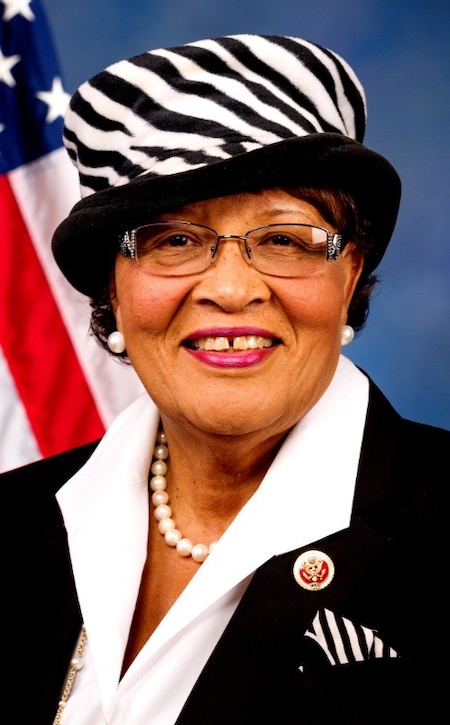
When Adams arrived in Congress in 2014, the classroom changed. So did her students.
Her colleagues became the audience for lessons on the Black maternal health crisis, the importance of investing in Historically Black Colleges and Universities and the economic realities facing families whose concerns rarely command the attention of Washington.
Now she is preparing to teach a new class.
Seven newly elected North Carolina Democrats are expected to take the oath of office on Jan. 3, 2027, joining a congressional delegation transformed by an election that defied the state’s Republican-drawn political map.
Adams, beginning her seventh full term, will become the dean of North Carolina’s Congressional Delegation. She is the delegation’s longest-serving member and a bridge between an experienced generation of lawmakers and a new one finding its footing.
Her lessons will be practical: how to navigate the labyrinth of the Capitol, reach the House floor before a vote closes, secure committee assignments and understand the complicated hierarchy of congressional leadership.
Others will be less easily taught: when to speak, when to listen, how to build alliances across ideological divides and how to recognize the moments when principle matters more than political convenience.
And then there are the unwritten rules of the cloakroom, the room just off the House floor where lawmakers gather, negotiate and conduct much of the business that never appears in the Congressional Record.
Adams approaches the assignment with a philosophy rooted in her years as an educator: Lighting another person’s candle does nothing to diminish your own flame.
In an institution where seniority is prized and influence carefully guarded, she sees mentorship not as a concession of power, but as an extension of it.
“I was a teacher long before I came to Congress, and I’ve never stopped teaching. When I help a new member find their footing, I’m not giving anything away. I’m helping make North Carolina’s delegation stronger. And when we’re stronger, the people we represent are better served.”
The title of dean carries no statutory authority, no additional vote and no gavel. Its influence comes instead from relationships, institutional knowledge and the respect accumulated over years of service.
For Adams, that experience spans 12 years in Congress and two decades in the North Carolina General Assembly. She understands the Capitol’s formal rules and, perhaps more importantly, the informal relationships that determine how effectively those rules can be used.
Her newest responsibility is to help others understand them, too.
A Delegation Remade
Two years ago, North Carolina sent 10 Republicans and four Democrats to the U.S. House of Representatives.
In January, based on unofficial election results, its delegation is expected to include 11 Democrats and three Republicans, a dramatic reversal that would give Democrats their first majority of the state’s congressional seats since 2013.
The victories also contributed to Democrats’ return to control of the House.
All four Democratic incumbents won reelection. Joining them are seven newcomers: Raymond Smith of the 3rd District, Chuck Hubbard of the 5th, Cyril Jefferson of the 6th, Richard Ojeda of the 9th, Jamie Ager of the 11th, Paul Barringer of the 13th and Lakesha Womack of the 14th.
They arrive with different backgrounds, political experiences and constituencies. Together, they represent a substantial shift in the state’s political representation and an opportunity for Democrats to exercise influence that has largely eluded them for more than a decade.
But the story of how they won is almost as consequential as the victories themselves.
The Map That Backfired
Every Republican-held seat that Democrats flipped in North Carolina was in a district drawn by Republican legislators.
In 2023, the Republican-controlled General Assembly approved a congressional map that helped produce a 10-to-4 Republican advantage in the state’s House delegation the following year.
In October 2025, at President Trump’s urging, lawmakers redrew the boundaries again, targeting the competitive 1st District and neighboring 3rd District. The plan passed along party lines. Under North Carolina law, the governor has no veto authority over congressional redistricting legislation.
The strategy did not produce the intended results.
Representative Don Davis, a Democrat, retained his seat in the 1st District. In the 3rd, where Republican legislators had sought to strengthen their party’s advantage, former state Representative Raymond Smith defeated Republican incumbent Greg Murphy by just 293 votes, according to the unofficial results.
The most striking upset came in the 14th District.
Two years earlier, Tim Moore, the former speaker of the North Carolina House who had presided over the 2023 redistricting process, won the district by approximately 15 percentage points.
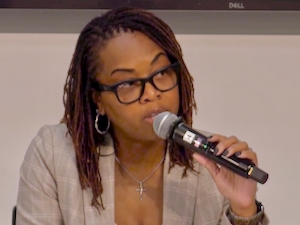
This year, LaKesha Womack, a Charlotte business consultant, minister and first-time political candidate, defeated him, 51.1 percent to 48.9 percent.
The financial disparity was extraordinary.
Womack raised approximately $60,000. Moore raised roughly $2.2 million.
Without the resources for a major television advertising campaign, Womack emphasized affordability, rural health care and direct conversations with voters. She carried only one of the district’s six counties, Mecklenburg, but her margin there was large enough to overcome Moore’s advantage elsewhere.
Her victory also created a new political relationship within Mecklenburg County, where her district shares a county boundary with Adams’s 12th District.
The two women will represent neighboring communities, one bringing decades of legislative experience and the other arriving with a victory few political observers would have predicted.
For Adams, the political consequences of redistricting are more than an abstract debate about electoral maps. She has lived through them.
When she first won election to Congress in 2014, North Carolina’s 12th District was among the most unusually shaped congressional districts in the nation. Its narrow boundaries snaked along Interstate 85, connecting portions of Greensboro, where Adams had spent decades teaching and serving in public office, to Charlotte, more than 90 miles away.
Two years later, following a federal court ruling, the district was redrawn. This time, its boundaries were confined to Mecklenburg County, leaving Adams’s longtime Greensboro home outside the district she represented.
The political consequences were immediate. Adams faced a competitive Democratic primary in unfamiliar territory, against opponents with longstanding Charlotte connections.
She won.
Rather than retreat to the political base she had cultivated over decades in Greensboro, Adams embraced the opportunity to represent Charlotte and continued serving the 12th District.
It was an early lesson in the unpredictability of redistricting, one that gave her a personal understanding of the distance between the communities politicians represent and the political boundaries drawn around them.
A decade later, another round of redistricting has transformed North Carolina’s congressional delegation. This time, Adams is not the newcomer navigating an altered political landscape. She is the experienced lawmaker preparing to help others navigate it.
“I know what it means to have your district redrawn and your political future questioned. I’ve lived it. But the voters of North Carolina have the final say. These elections remind us that no political map is more powerful than people who are determined to make their voices heard.”
For Adams, the election results offer more than a partisan victory. They create an opportunity to build a stronger, more coordinated congressional presence for North Carolina.
And that work has already begun.
A Welcome Rooted in History
Adams did not wait for the new Congress to convene before assuming the responsibilities of dean.
In the days following the election, she reached out to incoming members, offering guidance as they prepared for the transition to Washington.
The challenges are considerable. Newly elected representatives must assemble staffs, establish district offices, navigate congressional procedures and compete for committee assignments, all while preparing to serve constituents who expect immediate results.
Recently, Adams convened members and members-elect for a reception in her Washington office, an early opportunity to establish relationships before the pressures of the legislative calendar take hold.
For Adams, the gesture was more than ceremonial.
She remembers her own arrival on Capitol Hill.
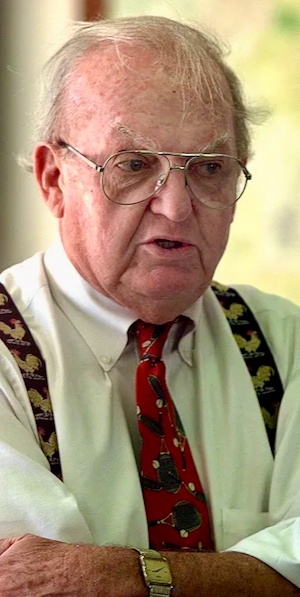
On Nov. 12, 2014, Republican Representative Howard Coble, then the dean of North Carolina’s congressional delegation, introduced Adams on the House floor as the “legislative lady with the hat,” a reference to the distinctive headwear that had become her trademark during her years in Raleigh.
The moment carried particular significance. Coble was a Republican welcoming a Democrat, and Adams was arriving in Washington after winning a special election that made her the 100th woman to serve in the 113th Congress.
More than a decade later, she has not forgotten the courtesy.
“When I arrived in Congress, Howard Coble, a Republican and the dean of our delegation, welcomed me on the House floor. I’ve never forgotten that gesture. He understood that we could belong to different parties and still share a responsibility to North Carolina. That’s the example I want to carry forward.”
The memory reflects a distinction Adams considers essential: Political parties may compete for power, but elected officials share a responsibility to the people they represent.
It is a lesson she intends to pass along.
Seniority, Experience and the Power to Shape Policy
Adams enters the 120th Congress with something no newly elected member can bring to Washington: the accumulated influence of time.
Her 12 years in the House have placed her in positions where legislative experience, committee seniority and longstanding relationships can translate into political leverage.
She serves on two committees whose decisions reach deeply into the lives of North Carolina families.
On the House Committee on Education and the Workforce, Adams is the ranking Democrat on the Subcommittee on Higher Education and Workforce Development, which oversees issues involving federal student assistance, colleges and universities, and workforce training. She also serves on the Subcommittee on Early Childhood, Elementary, and Secondary Education.
On the Agriculture Committee, her assignments include the Subcommittee on Nutrition and Foreign Agriculture, which oversees the Supplemental Nutrition Assistance Program, and the Subcommittee on Conservation, Research, and Biotechnology.
With Democrats poised to control the House, Adams could be positioned to assume greater authority over higher education policy. Ranking members traditionally have a strong claim to committee or subcommittee leadership when their party takes the majority, although final assignments and leadership decisions remain subject to the new Congress.
For a former college professor who has spent much of her political career advocating for educational opportunity, the possibility is particularly consequential.
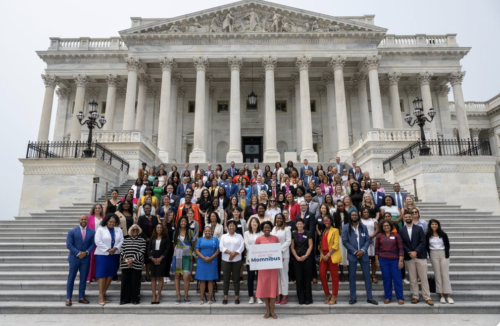
Adams founded the bipartisan Congressional HBCU Caucus, bringing lawmakers from both parties together around the needs of historically Black institutions. She also co-founded the Black Maternal Health Caucus, helping elevate a public health crisis that had too often been overlooked in national policy discussions.
Through that caucus, she helped advance the Black Maternal Health Momnibus, a package of legislation designed to address maternal mortality, improve access to care and confront the disparities that place Black mothers at disproportionate risk.
Her earlier congressional leadership positions include vice chair of the Agriculture Committee and ranking member assignments on subcommittees addressing small business oversight and workforce protections.
Before Washington, Adams’ professional life began in a classroom at Palmer Memorial Institute in Sedalia, North Carolina, one of the nation’s most prestigious private college preparatory schools for African American students. Founded in 1902 by pioneering educator Charlotte Hawkins Brown, Palmer earned national recognition for its academic excellence. After completing her graduate studies in 1970, Adams became chair of the art department, teaching students in grades seven through 12.
Her political career began with students, too. In 1984, Adams became the first Black woman elected to the Greensboro City School Board, where she served for two years. Elected to the Greensboro City Council in 1987, she served nine years before continuing her legislative career in the North Carolina House of Representatives, where she served for 20 years and twice chaired the Legislative Black Caucus.
It is an uncommon trajectory: artist, educator, school board member, city council member, state legislator and member of Congress. Through it all, education has remained the connective thread.
Adams has used each position to expand opportunity for people and institutions whose voices have too often been absent from decisions affecting their futures.
Now, with a larger Democratic delegation and the prospect of greater influence in the House, she has an opportunity to extend that work through a new generation of lawmakers.
The Work Beyond the Election
The election altered North Carolina’s political landscape. It did not erase the challenges facing the people who live there.
Families continue to struggle with the cost of health care, housing and groceries. Rural communities face persistent barriers to medical services and economic opportunity. Colleges and universities, particularly HBCUs, are confronting questions about federal investment, access and long-term sustainability.
Those challenges will not be resolved by a change in party control alone.
For Adams, the task ahead is to turn a political majority into meaningful legislative results.
That will require more than votes. It will require relationships among members representing different parts of the state, cooperation across committee jurisdictions and, when possible, partnerships with those whose constituents face many of the same concerns.
The new Democratic members will bring fresh perspectives and the momentum of hard-fought campaigns. Adams brings institutional memory, legislative experience and relationships developed over decades in public service.
Her role is not to tell them what to think. It is to help them understand how Congress works, where opportunities exist and how to turn the priorities that brought them to Washington into policies that can make a difference back home.
For Adams, leadership has never been measured solely by the office one holds or the title that comes with it. It is measured by what one accomplishes, whose lives are improved and whether the path becomes easier for those who follow.
That philosophy carried her from the classrooms of Bennett College to the North Carolina General Assembly and eventually to the halls of Congress. Along the way, she has navigated shifting political boundaries, changing majorities and the often frustrating pace of legislative progress.
“I’ve always believed that we are stronger when we lift as we climb. The people of North Carolina have given us an extraordinary opportunity, and with that opportunity comes responsibility. Our job now is to work together, deliver results and make sure the people who sent us here are never forgotten.”
In the weeks ahead, Adams will welcome new colleagues, help them navigate unfamiliar corridors and share the lessons accumulated over a lifetime in public service.
She will do it with the patience of a professor, the instincts of a seasoned legislator and the unmistakable presence of a woman whose hats have become as recognizable as her voice.
For Adams, the classroom has changed once again, but the teacher remains the same.