May 5, 2026
By SEAN LANGLEY
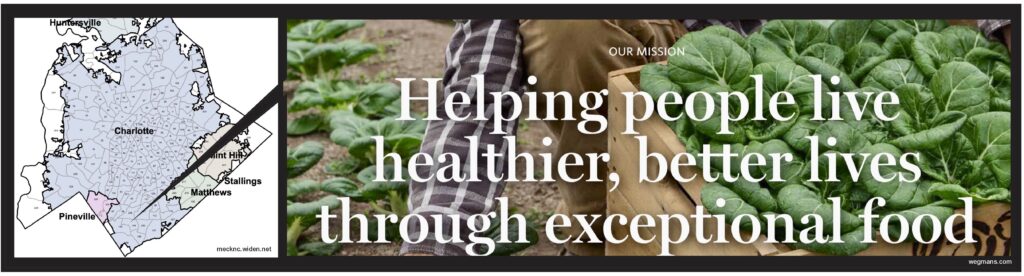
This time, the conversation has shifted to the new Wegmans currently under development in Ballantyne. As often happens whenever a major grocery store announces plans for a new location, the discussion quickly turns to why these investments continue to flow to certain parts of Charlotte while East and West Charlotte remain overlooked.
I recently read an article from a local news publication highlighting the persistent inequities that continue to exist across East and West Charlotte. While the article raised important concerns about food access, it also points to a broader issue: the social and economic inequalities reflected in corporate investment decisions and our collective unwillingness to confront longstanding systemic challenges.
What often gets overlooked is that families in East and West Charlotte are already spending millions of dollars on groceries every year – just not in their own communities. Residents are forced to leave their neighborhoods to purchase basic necessities, which not only limits convenient access to healthy food options but also imposes additional transportation costs. More importantly, those dollars are spent elsewhere, draining wealth, economic activity, and opportunity from communities that have experienced decades of disinvestment.
The perception that these communities are unsafe further contributes to the lack of investment. These narratives often overshadow the reality that East and West Charlotte are home to educated, hardworking families who have remained committed to their neighborhoods despite years of exclusion from the economic growth and investment enjoyed elsewhere in the city. Unfortunately, these perceptions become self-reinforcing and are frequently cited as reasons businesses choose not to invest.
As a proud West Charlotte resident, I am grateful for leaders such as J’Tanya Adams and Rickey Hall, who are helping advance cooperative grocery stores and other sustainable food-access solutions for communities that have been overlooked and underserved for far too long. Their efforts represent the type of community-driven leadership and investment needed to create meaningful, lasting change.
 I would also encourage reporters, commentators, and policymakers to move beyond coded language and simplistic explanations. The conversation should focus more directly on the institutions, policies, and historical development patterns that continue to shape these inequities today. ZIP codes should not determine life expectancy, access to healthy food, economic opportunity, or overall quality of life.
Rather than simply celebrating every grocery store announced in affluent areas, we should also hold these companies accountable. Ask why they are not investing in communities that have demonstrated loyalty, resilience, and significant consumer spending power. Demand that they become partners in addressing food insecurity and economic inequality by establishing brick-and-mortar businesses in underserved communities. If public officials are willing to support zoning approvals, infrastructure investments, and economic development incentives for these companies, then communities should expect a commitment to equitable investment as well.
Communities deserve more than promises, feasibility studies, and market analyses; they deserve tangible investments that create jobs, expand access to healthy food, generate local wealth, and strengthen neighborhood stability. These companies should not simply benefit from prosperity where it already exists; they should help cultivate it where it has been denied for far too long.
At the same time, local and state leaders must be willing to create the conditions that encourage equitable investment. Public incentives, economic development strategies, infrastructure improvements, and community partnerships should not be concentrated solely in areas that are already thriving. Equity requires intentional action and a commitment to ensuring that all communities share in Charlotte’s growth and prosperity.
Thank you to everyone who continues to bring attention to this important issue. The fight for equitable food access is about more than groceries; it is about fairness, dignity, investment, economic justice, and the future of our communities. If Charlotte is truly committed to becoming a city of opportunity for all, then that opportunity must extend beyond a select few neighborhoods and be reflected in the investments we make, the businesses we recruit, and the policies we pursue.
The question is not whether East and West Charlotte deserve the same opportunities as other parts of the city. They do. The real question is whether we have the collective will to demand the equitable investments necessary to make that vision a reality. I think we do.