Dec. 2, 2025
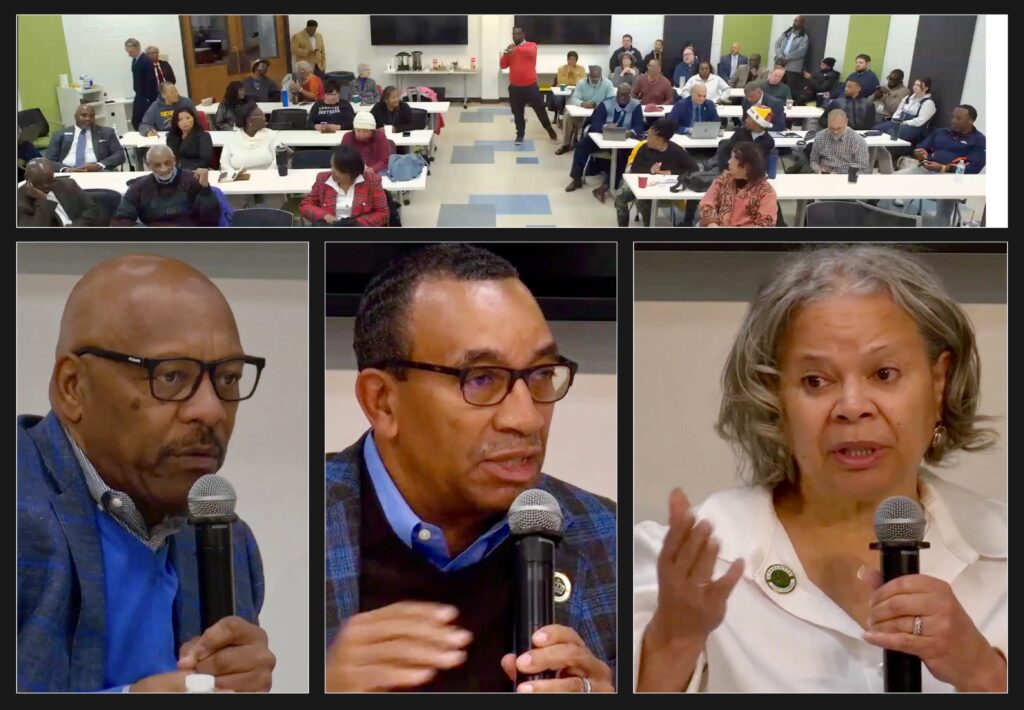
At facilitator Laura McClettie’s request, Mayor Vi Lyles focused this morning’s Forum on how the city should approach issues key to city’s future.
One thread from the session: Charlotte leaders believe residents must be more outspoken on their needs and priorities. And for the city to make progress on what former CMS Supt. Jim Pughsley often called “the big rocks,” residents must be willing to buttonhole the deciders. No mayor or City Council member alone can deliver what residents want and deserve.
“Be a part of the decision-making,” Lyles pleaded.
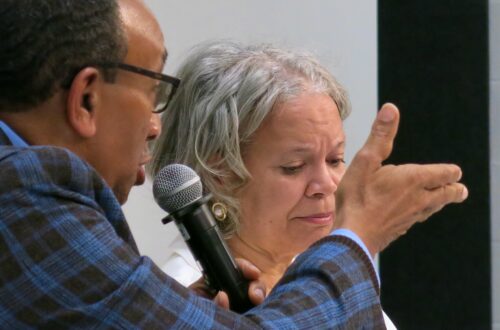
At Forum after Forum lately, time has been taken by presenters to explain, both to Charlotte natives and to residents new to North Carolina, why the “deciders” are often not on City Council or in the mayor’s seat. They are the state’s legislative and executive leaders in Raleigh. Tuesday, it was interim City Attorney Anthony Fox’s turn to explain Dillon’s Rule.
Newly elected Mayor Pro Tem James Mitchell said the Council will be on retreat in late January and, if past is prologue, will emerge with a council united on its agenda. He promised an update in February.
Topics discussed Tuesday included the transportation tax and the planned road, rail and bus improvements to be financed via the tax; data centers; living wages; catching up citywide with uneven levels of city roads, sidewalks and services; city plans to deal with special events and disasters; workforce development; control of toll-road pricing; tools for neighborhood preservation; linkage between the destruction of Black family stability and household wealth during 1960s urban renewal, and today’s Black crime; and systems that dilute the impact of Black voices.
– – – –
Observations from livestream listeners
The following comments were made on the Forum website Tuesday morning when the morning’s livestream was being shown. All but one were left anonymously. All have been lightly edited for syntax.
We all knew crime and youth’s behavior was a severe problems. We have numerous intervention programs to address crime and other intervention programs. How are these program evaluated? How do we address the success of these programs? We tend to reward people for having “good jobs” and reward people who have been the first to occupy a position.
I-77 doesn’t need to be widened. Transportation planning and mass transit needs to be improved. Freeway widening has never worked and will only displace more Black people.
Black neighborhoods were purposefully destroyed by infrastructure and at this point, without targeted and specific policies and procedures to protect Black neighborhoods, they will continue to be destroyed.
I am a Black engineer, and unless we are the ones working on these projects, and have enough clout to influence the project design, white supremacy will prevail. And no, Mayor Lyles, it’s not just that engineers are technical, it’s that most non-Black engineers do not care about Black people.
We need some Black engineers to help the community. I will volunteer.
Thank you Mother! Say it!
That’s Emergency Management, it includes the County.
Reparations, Mayor Lyles. That’s how we catch up.
For sure, Black businesses need more contracts. Brother, contact the MBE office at the county. Jamila Davis can help.
Good morning! I live in District 6 and I do NOT support the expansion of I-77 as planned.
Also – this is the best forum in town. Thank you, facilitators and participants.
Great comment, young man. So, more policing?
No, it doesn’t.
Thank you district 6 representative. Black History does not just include the West side. Black History exists throughout Mecklenburg County. The Harvey Boyd family comes from The Teeter Plantation, what is now the Novant Hospital in Matthews.

Dec. 2, 2025
Nothing will end this Dillon’s Rule controversy, but here is some background, from Coates’ Canons NC Local Government Law
“The ‘rule’ refers to a standard for judicial interpretation – a guide for judges suggesting that municipal powers should be narrowly construed. It was developed by John Forest Dillon, a judge and scholar who wrote a famous treatise in 1872 about local government law. The rule says:
“’It is a general and undisputed proposition of law that a municipal corporation possesses and can exercise the following powers, and no others: First, those granted in express words; second, those necessarily or fairly implied in or incident to the powers expressly granted; third, those essential to the accomplishment of the declared objects and purposes of the corporation – not simply convenient, but indispensable.’”
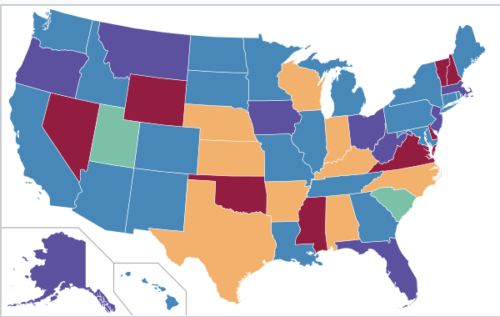
Got that? The folks who have replanted themselves in Charlotte, and particularly those from the states shown in purple, have likely never heard of Dillon’s Rule or seen its effects. They lived in or near cities that control their own destinies. Welcome to North Carolina!
The “decider,” even back in John Forest Dillon’s day, was the state legislature that created the municipal corporation. In fairness, Coates’ Canons note that North Carolina is not a totally Dillon’s Rule state. But as NC legislators have focused more attention on telling big cities what they can and can’t do, Dillon’s Rule is uppermost in city and county leaders’ minds.
Charlotte native Anthony Fox’s summary of Dillon’s rule, in the video above, is informed by decades in private legal practice, acting as legal counsel for municipalities across North Carolina.
– Steve Johnston